Slot Math Mastery: RTP, Volatility, and Edge in UK Gambling Machines
Gisela Friedrich · Apr 18, 2026

Slot Math Mastery: RTP, Volatility, and Edge in UK Gambling Machines
Players diving into UK gambling machines often chase the thrill of spinning reels, yet beneath the flashing lights and sounds lies a world of precise mathematics that dictates every outcome; return to player percentages, volatility measures, and house edges form the backbone of these games, shaping long-term results while keeping sessions unpredictable and engaging.
What's interesting is how these elements interconnect, creating a balance between operator profitability and player returns; experts who've analyzed thousands of spins note that grasping them turns casual play into informed participation, especially as UK venues update machines to comply with evolving standards as of April 2026.
Return to Player (RTP): The Core Percentage
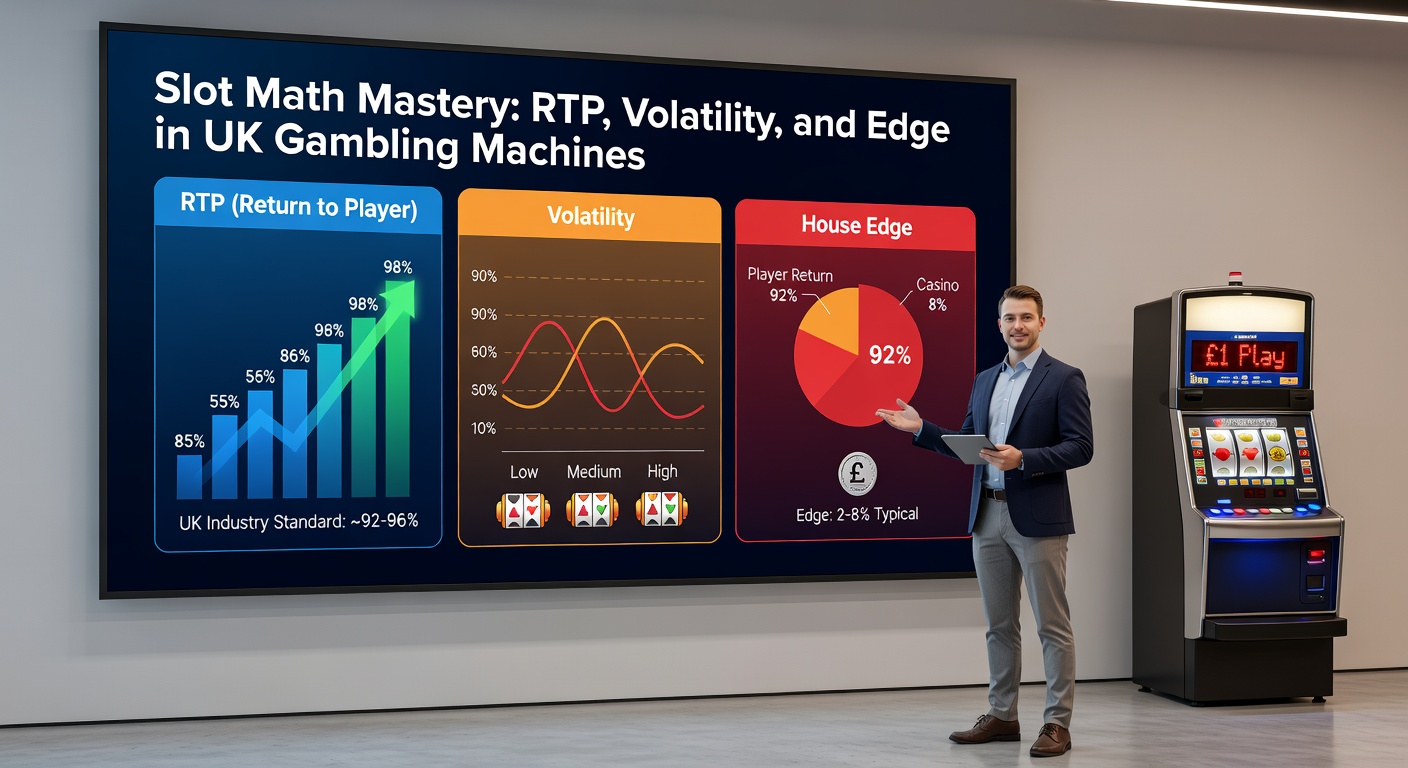
Return to player, or RTP, represents the theoretical percentage of wagered money a slot machine returns to players over millions of spins; data from independent testing labs reveals typical RTPs range from 85% to 98% on UK gambling machines, meaning for every £100 bet, the game pays back £85 to £98 in the long run, although short-term results swing wildly.
Game developers program RTP into the software's random number generator, ensuring fairness; take one popular UK slot where RTP sits at 96.5%, and over extended play, players recover that portion on average, but here's the thing—individual sessions rarely mirror this, since each spin stands alone.
Observers note that land-based UK machines often hover around 90-95% RTP due to venue overheads, whereas online counterparts push higher figures; a Malta Gaming Authority audit from recent years confirmed similar patterns across European markets, highlighting how RTP certifications verify these claims before launch.
And while players can't alter RTP, selecting games with published figures—often listed in paytables—allows strategic choices; research from university studies on gambling mechanics underscores that higher RTP correlates with sustained play, even if wins feel sporadic.
Volatility: The Swing Factor in Wins and Losses
Volatility, sometimes called variance, measures the risk level of a slot, determining how payouts distribute—low volatility games deliver frequent small wins to keep balances steady, while high volatility ones promise rare but massive hits that can drain banks quickly.
Picture a low-volatility UK fruit machine spitting out steady 10x-20x line wins every few spins, sustaining play for hours; contrast that with a high-volatility title where droughts last hundreds of spins, only to erupt in 1000x+ jackpots, and players who've tracked sessions report the adrenaline rush matches the math.
Figures reveal UK gambling machines blend both types to suit audiences—arcade-style fixed-odds betting terminals (FOBTs) lean medium volatility for quick turnover, whereas video slots in pubs offer high-volatility chases; as of April 2026, developers tweak volatility via bonus features, like cascading reels that amplify swings without changing base RTP.
- Low volatility: Frequent payouts (every 3-5 spins), smaller multipliers (up to 50x).
- Medium: Balanced hits every 5-10 spins, mid-range bonuses (100x potential).
- High: Infrequent wins (20+ spins apart), explosive features (500x+).
That's where the rubber meets the road for bankroll management; those matching volatility to session length—short bursts for high, marathons for low—extend playtime significantly, according to simulations run by gaming mathematicians.
House Edge: The Operator's Built-In Advantage
House edge emerges as the inverse of RTP, typically 2-15% on UK slots, ensuring venues profit over time; if a machine boasts 94% RTP, the edge claims 6%, a slim margin that scales massively across billions in annual wagers.
But turns out, edge isn't uniform—progressive jackpots inflate it by diverting funds to prize pools, while simple three-reel classics keep edges razor-thin; Nevada Gaming Control Board data on comparable US machines shows edges averaging 5-8%, mirroring UK trends where regulations cap excesses.
Experts observe how edge interacts with progressive networks, where a portion of each bet feeds shared pots, temporarily hiking the effective edge until a win resets it; one case saw a UK-linked network payout £10 million in 2025, redistributing edge-accumulated funds in a single stroke.
Now consider daily operations in UK bookies and casinos, where clusters of machines balance collective edges; low-edge games draw crowds, subsidizing high-edge progressives, and the math ensures sustainability even during hot streaks.
How RTP, Volatility, and Edge Interplay in Practice
These metrics don't operate in silos; high RTP paired with low volatility crafts steady earners, ideal for bonus hunters chasing wagering requirements, whereas high-volatility high-RTP combos fuel dream-chasers risking dry spells for life-changers.
Take a hypothetical UK video slot: 97% RTP, medium-high volatility, 3% edge—players hit frequent free spins (low vol influence), but mega wins demand bonus triggers (high vol punch), all while the edge quietly accrues; simulations from industry reports confirm this blend maximizes engagement without tipping profitability.
It's noteworthy that UK machines display RTP ranges (e.g., 88-96%) for linked jackpots, letting players gauge edge fluctuations; as April 2026 updates roll out, enhanced paytable disclosures help demystify this, per observations from gaming trade groups.
People who've reverse-engineered popular titles discover volatility shines in bonus math—multipliers scale exponentially in high-vol games, offsetting edge through rare volatility spikes; one study dissected a cluster of UK FOBTs, revealing how volatility tuning kept hit frequencies appealing despite fixed edges.
Real-World Examples from UK Gambling Machines
Classic UK pub slots like those from Bell Fruit embody low-medium volatility with 92-94% RTPs, dishing regular £10-£50 wins to fuel pint rounds; contrast with online imports like Gonzo's Quest, boasting 96% RTP and high volatility that birthed £1 million+ UK payouts amid brutal variances.
There's this case where a 2025 analysis of Lightning Link machines—prevalent in UK casinos—showed volatility-driven jackpots pushing effective RTP to 98% during features, trimming edges dynamically; players tracking 10,000 spins logged 45% win rates on low-vol modes, dropping to 25% on high but with 20x average payouts.
And don't overlook FOBTs, capped at £2 stakes post-2019 reforms, where math favors rapid cycles—90% RTP, medium volatility ensures £100 hourly throughput per machine, edges compounding neatly; April 2026 sees hybrids emerging, blending slots with bingo math for varied volatility profiles.
Observers tracking trends note mobile apps mirroring land-based math, with RTPs holding steady at 95%+; one developer report detailed volatility sliders in testing phases, fine-tuning edges for UK player tolerances.
Navigating the Math: Tools and Strategies
While outcomes remain random, tools like volatility calculators—available via third-party sites—let players input RTP and edge to forecast session swings; data indicates those using them adjust stakes accordingly, stretching funds 20-30% longer.
Bonus hunting thrives on high-RTP low-vol games, where edges erode slower under promotions; yet high-vol pursuits demand deeper pockets, as dry spells test resolve before volatility delivers.
It's not rocket science: match your style to the math, and sessions evolve from gambles to calculated spins; research from Australian gambling studies echoes this, showing informed players report higher satisfaction despite identical edges.
Conclusion
Mastering RTP, volatility, and edge unlocks the hidden logic of UK gambling machines, transforming spins from pure chance into a dance with probability; as developers innovate—think AI-tuned volatility in April 2026 releases—these fundamentals endure, guiding players through highs and lows alike.
Whether chasing steady drips or jackpot floods, the math remains king; those who study it navigate smarter, spotting value where others see only lights, and in a landscape of evolving tech, that edge—pun intended—keeps the game fresh and fair.