Payout Structures in UK Gambling: A Category-by-Category Breakdown
Gisela Friedrich · Aug 22, 2026
Payout Structures in UK Gambling: A Category-by-Category Breakdown
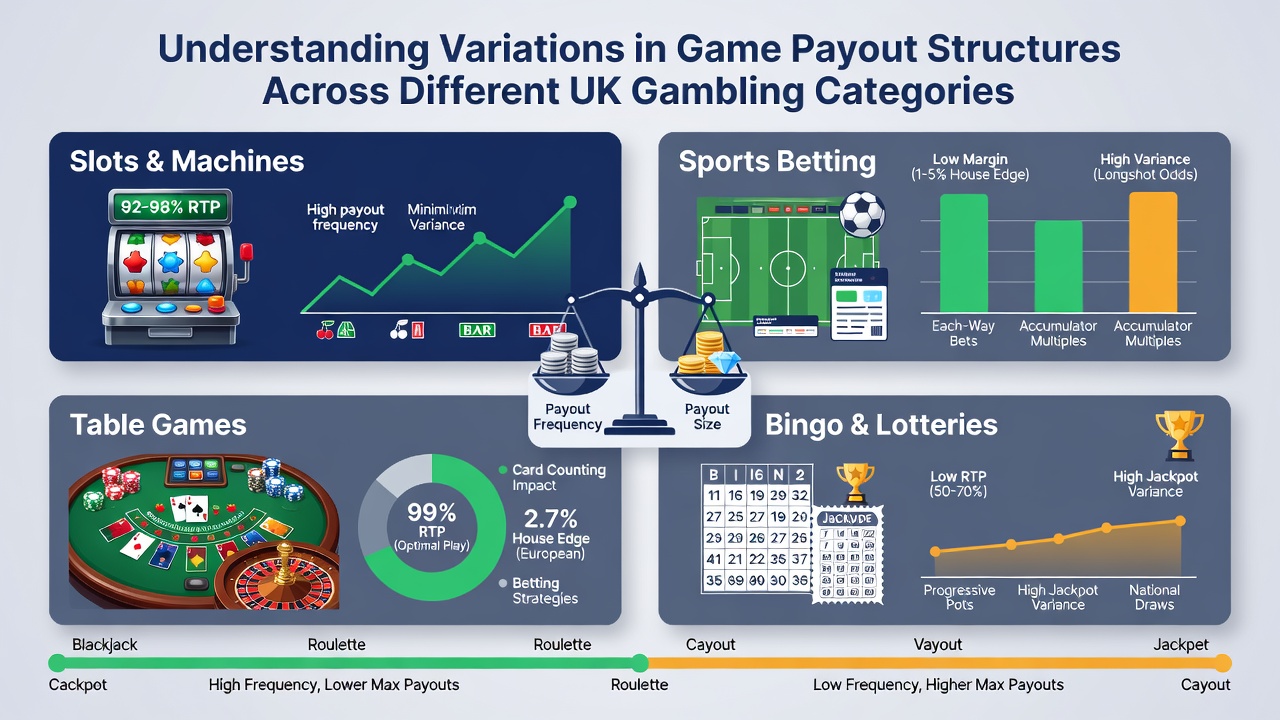
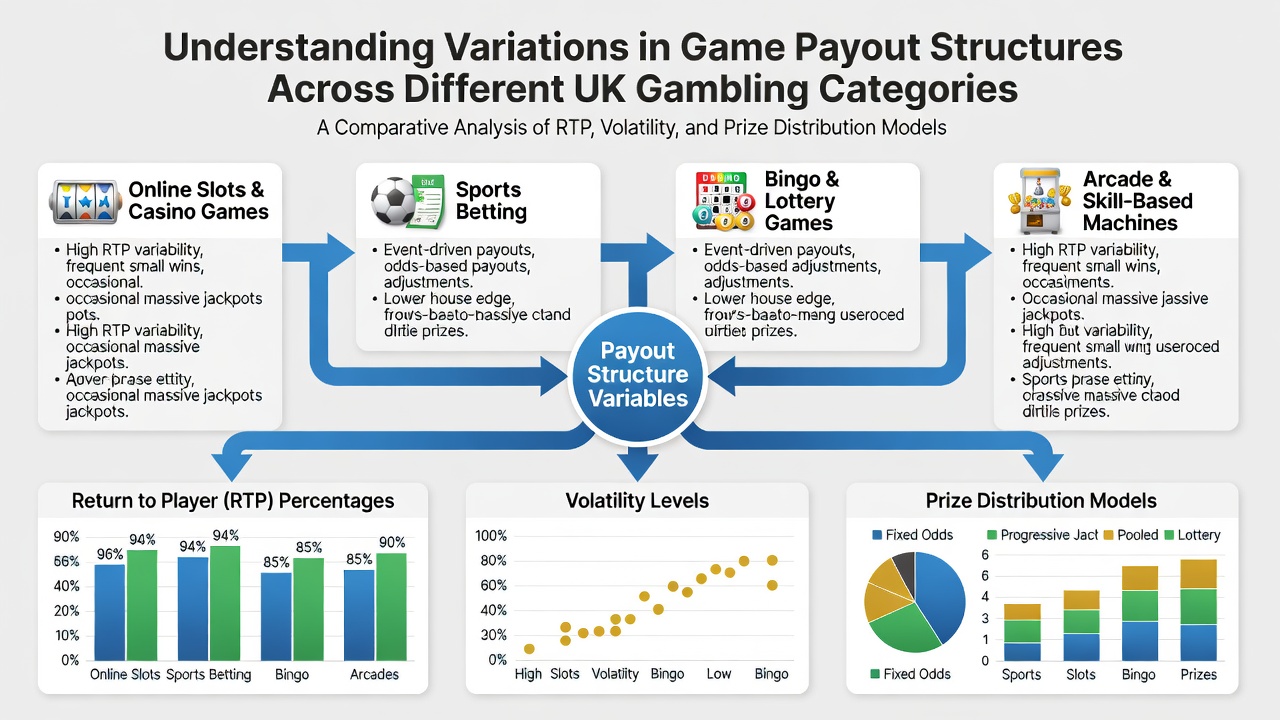
UK gambling encompasses multiple categories where payout structures operate under distinct mathematical models that determine how winnings distribute over time, and these frameworks vary significantly between slots, table games, bingo, and sports betting. Operators calculate returns through algorithms that factor in stake amounts, game rules, and random number generators, while regulatory standards require transparency in how these percentages get communicated to players. Data indicates that average returns to player across licensed platforms sit between 95 and 98 percent for many digital offerings, yet the actual delivery of those returns differs based on volatility levels and prize distribution methods.
Slots and Their Return Mechanisms
Slots rely on random number generators that produce outcomes independent of previous spins, and their payout structures typically feature a theoretical return to player percentage that accounts for all possible combinations over millions of plays. Fixed jackpot slots offer consistent payout rates that remain unchanged regardless of player volume, whereas progressive machines accumulate portions of each bet into growing prize pools that reset after each win. Observers note that low-volatility slots deliver frequent smaller wins that maintain steady bankrolls, while high-volatility titles concentrate larger prizes into rarer events that create extended dry spells between payouts. Research from academic institutions in North America shows these variations influence session length and player engagement patterns across different machine types.
Table Games and Probability-Based Payouts
Table games such as blackjack and roulette operate on fixed odds derived from combinatorial mathematics, and their payout structures remain constant because each hand or spin follows established probability tables without accumulation mechanics. Blackjack payouts adjust slightly based on rule variations like dealer hit on soft 17 or number of decks in play, whereas roulette wheels maintain house edges through single-zero or double-zero configurations that directly affect long-term returns. Those who study these systems find that perfect strategy in blackjack reduces the house advantage to under one percent in optimal conditions, while roulette bets carry fixed edges ranging from 2.7 to 5.26 percent depending on the wheel type. And because these games use physical or digital equivalents of cards and wheels, payout calculations stay transparent and verifiable through published probability charts.
Bingo and Community Prize Pools
Bingo payout structures distribute prizes from collective ticket sales rather than individual game algorithms, and operators allocate fixed percentages of total stakes into prize funds that get shared among winners in each game. Traditional 90-ball bingo features multiple prize tiers including lines and full houses that pay out at predetermined ratios, while 75-ball variants adjust patterns and payouts according to room size and ticket demand. Figures reveal that bingo operators typically return between 70 and 85 percent of stakes in prizes, with the remainder covering operational costs and regulatory fees. This community-driven model creates payout timing that depends on how many players participate in each session, unlike the independent outcomes found in slots or table games.
Sports Betting and Odds-Driven Returns
Sports betting payout structures center on odds that bookmakers set according to statistical models, market movements, and margin calculations that embed the operator's edge into every wager. Decimal, fractional, and American formats express these odds differently yet all deliver the same underlying probabilities adjusted for profit margins that usually range between 2 and 10 percent across events. Accumulator bets combine multiple selections into single wagers that multiply odds while increasing risk, and their payout structures reflect the combined probabilities of each leg succeeding. Studies conducted by research centers in Australia demonstrate that live betting introduces dynamic odds adjustments during events that further alter potential returns compared with pre-match markets.
Regulatory Influences on Payout Transparency
Standards from bodies outside the UK, including guidelines issued by the Nevada Gaming Control Board and reports from the Australian Gambling Research Centre, emphasize consistent disclosure of payout percentages across all categories. These frameworks require operators to maintain verifiable records that demonstrate compliance with advertised return rates, and independent testing agencies audit the random number generators and prize distribution systems regularly. As of August 2026, updated reporting protocols have expanded requirements for real-time payout data publication in several jurisdictions, which allows observers to track how structures evolve with technological changes. Such measures ensure that variations between categories remain documented rather than obscured by marketing claims.
Conclusion
Understanding payout structures across UK gambling categories requires attention to the distinct mathematical foundations that govern each type, from algorithmic returns in slots to probability tables in table games and collective pools in bingo. These differences shape how players experience wins and losses over extended periods, and data from multiple international sources continues to highlight the importance of transparent communication. Industry reports and academic analyses together provide the factual basis for comparing these models without relying on promotional language. People who examine these variations find that informed decisions start with recognizing how each category allocates its returns through its specific structural rules.