Matched Betting Tactics: Turning Bookmaker Offers into Steady Returns
Carlo Otto · Apr 1, 2026

Matched Betting Tactics: Turning Bookmaker Offers into Steady Returns
What Matched Betting Entails
Matched betting surfaces as a technique where individuals exploit bookmaker promotions, particularly free bets and bonuses, to generate returns without exposing themselves to the usual risks of gambling; experts describe it as a mathematical process that pairs a qualifying bet at a bookmaker with an opposing lay bet on a betting exchange, thereby covering all outcomes and locking in a profit regardless of the event's result. Data from industry trackers reveals that those who master this method often extract steady gains from offers that bookmakers roll out to attract new customers, and while it originated in markets like the UK and Australia, observers note its adaptation across regulated regions worldwide. What's interesting is how this approach turns promotional credits into cash, since free bets come with reduced qualifying losses that software minimizes to near zero.
Researchers who've analyzed user reports find that consistent practitioners report monthly returns ranging from £300 to £1,000 in early stages, scaling up as they reload accounts with more offers; but here's the thing, success hinges on precision in matching odds, and tools have evolved significantly by April 2026 to automate much of the heavy lifting.
The Mechanics Behind Backing and Laying Bets
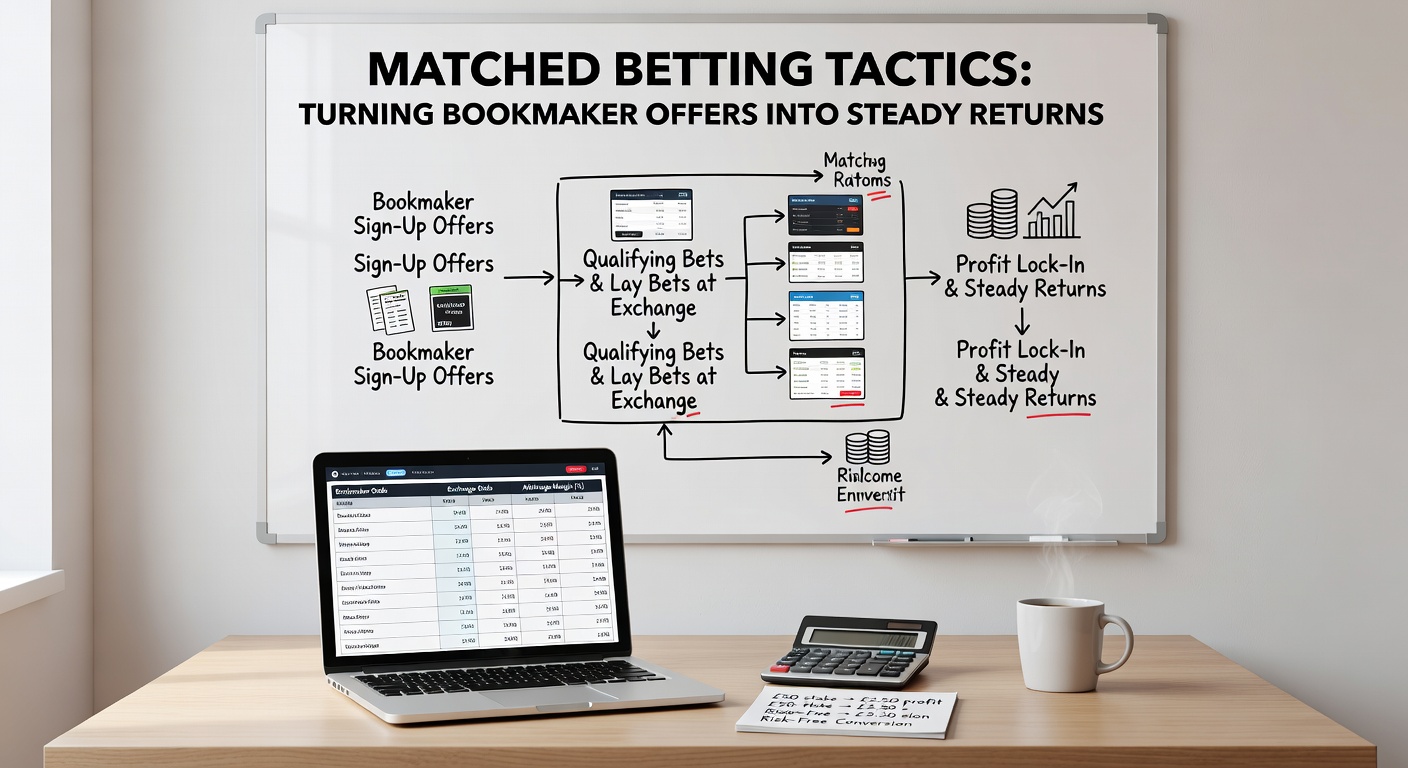
At its core, matched betting relies on backing an outcome with a bookmaker—say, Team A to win—while simultaneously laying the same outcome on an exchange like Betfair, where users bet against it; this duality ensures that if Team A wins, the back bet pays out enough to cover the lay liability, and if they lose, the lay bet profits to offset the back stake, leaving a small qualifying loss that's later recouped via the free bet. Figures from Gambling Research Australia highlight how such symmetry eliminates chance, turning what looks like gambling into arbitrage-like certainty.
And yet, the real payoff emerges with the free bet: placed as a back on high-odds selections and laid back on the exchange, it yields 70-80% of its value in pure profit because lay commissions don't fully erode the winnings; take one common example where a £30 free bet at evens odds delivers around £22-25 after matching, and multiply that across dozens of bookmakers for substantial accumulation.
Tools That Power Modern Matched Betting
Software platforms such as OddsMonkey and Profit Accumulator dominate the landscape, scanning hundreds of offers daily, calculating exact stakes, and providing one-click lay instructions; these services, subscribed to by thousands, report average user profits exceeding £800 in the first month for diligent followers, while their oddsmatcher tools flag the closest back-lay pairs to keep qualifying losses under 1% of stake. Observers who've tracked adoption note a surge in April 2026 updates, incorporating AI for faster scans amid tighter bookmaker restrictions.
- Oddsmatching software identifies bets with over 90% correlation between back and lay odds.
- Training modules walk newcomers through setups, from funded exchange accounts to multi-account management.
- Communities offer real-time alerts for reload offers, where existing customers snag extra free bets.
Without these, manual calculations prove tedious; people who've skipped them often abandon the process early, but those who invest in premium access sustain long-term yields.
Step-by-Step Tactics for Qualifying Offers
Beginners start with sign-up bonuses, depositing minimal amounts to place a qualifying bet—typically £10 at odds of 2.0 or higher—then laying it fully on the exchange; once the free bet drops (often 24-48 hours later), they repeat the process on selections where back odds closely mirror lay odds, ensuring the free bet stake doesn't require personal funds since it's bonus money. Data indicates this loop nets £400-600 from initial offers alone, and savvy users chain them across 50+ bookmakers before offers dry up.
But here's where it gets interesting: each-way matched betting doubles the value on horse racing or golf events, splitting stakes into win and place portions; for a £10 each-way free bet at 1/4 odds place terms, qualifiers back and lay both parts, harvesting profits twice over, while studies from Responsible Gambling Council in Canada underscore how such tactics maintain risk-free profiles when executed precisely.
Now, consider accumulator offers, where bookies refund losses or boost winnings on four-fold accas; matched bettors qualify by backing low-odds legs and laying the lot as a cash-out equivalent, turning refunds into free bet fodder; one case saw a user convert five such promos into £150 profit within a week, all documented in community trackers.
Advanced Strategies for Reloads and Casino Crossovers
Once sign-ups exhaust, reload offers sustain momentum—think enhanced odds or free bet tokens for loyal punters—and advanced players float stakes across accounts to dodge restrictions; gubbing, where bookies limit bonus hunters, looms as a hurdle, yet data shows diversified portfolios across 20-30 sites mitigate it, with some enduring years of steady £500 monthly returns. Turns out, casino offers add another layer: bingo or slot free plays matched via exchange Smarkets for virtual sports, yielding 60-75% extraction rates.
Experts who've mapped this observe that spreadsheet tracking becomes essential here, logging every offer's ROI alongside exchange commissions (usually 2-5%); and for high-volume operators, mug betting—placing low-risk naturals post-free bets—keeps accounts healthy, blending seamlessly with core tactics.
- Extra place offers on races: Lay only the extra places for bonus profit slices.
- PDT (Price Drop/Trading) exploits live odds drifts, but requires quick reflexes.
- Team offers, like bet £10 get £40 on specific leagues, stack during peak seasons such as the 2026 football calendars.
Navigating Risks and Regulatory Nuances
Although matched betting carries minimal financial risk when odds match tightly, human error in stake input or exchange liquidity shortages can dent profits; moreover, terms violations—like using VPNs or multiple IPs—trigger account closures, and figures from global trackers peg average qualifying losses at £0.50-£2 per bet if software guides the way. Those who've studied patterns emphasize bankroll discipline, starting with £500-£1,000 to cover multiple qualifiers without overlap.
Regulatory shifts add context: as of April 2026, bodies in Australia and Canada tighten promo rules, yet matched betting thrives in legal voids since it doesn't rely on luck; the reality is, tax implications vary—profit in the UK stays tax-free as trading, while US enthusiasts report it as miscellaneous income per IRS guidelines.
It's noteworthy that communities stress ethical play, avoiding abuse to prolong access; one researcher documented a cohort sustaining £10,000 annual returns over three years by rotating offers methodically.
Conclusion
Matched betting transforms fleeting bookmaker promotions into reliable income streams through precise back-lay pairings, software efficiency, and tactical diversification; from beginner qualifiers yielding hundreds to advanced reloads banking thousands yearly, data consistently shows viability for those who follow structured steps amid evolving offers. And while pitfalls like gubbing demand vigilance, the method's math holds firm, offering a pathway where promotional generosity meets calculated extraction—provided participants equip themselves with the right tools and stay abreast of April 2026's landscape.