Licensing Requirements and Their Effects on Bonus Offers and Game Libraries in British Online Gaming
Carlo Otto · Nov 7, 2026
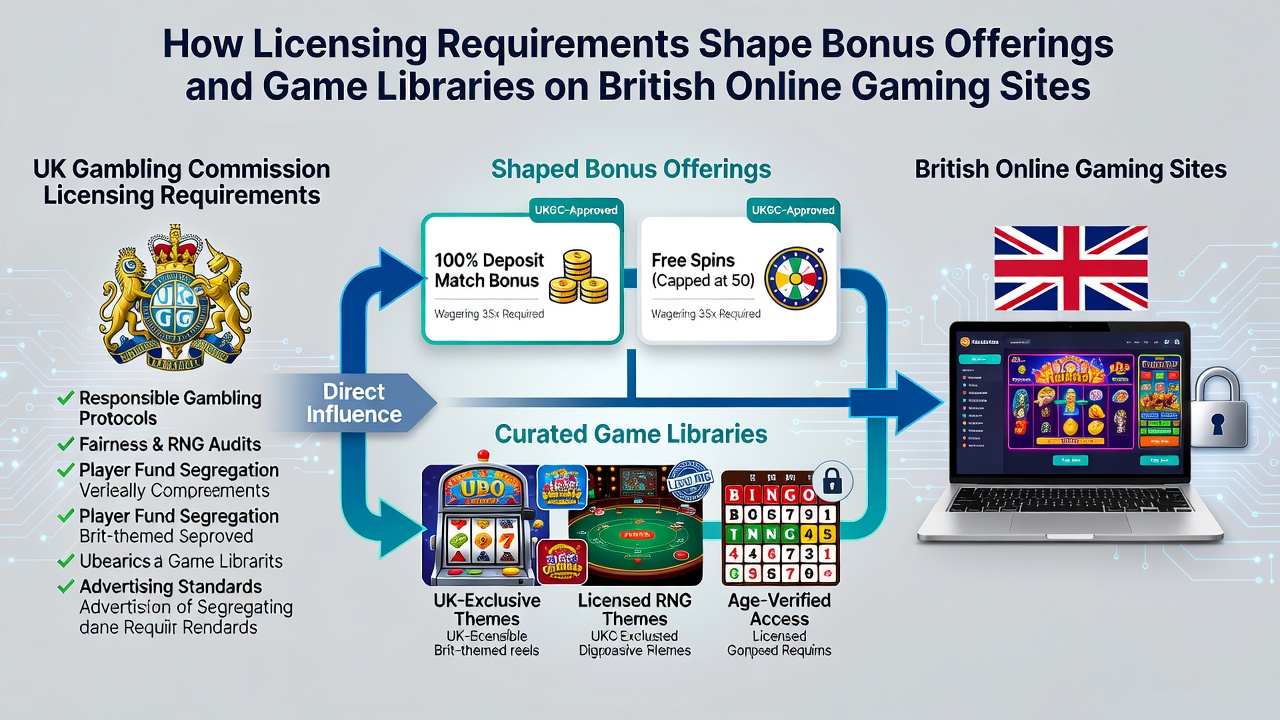
Licensing Requirements and Their Effects on Bonus Offers and Game Libraries in British Online Gaming
Regulatory frameworks governing online gaming in Britain establish clear parameters that operators must follow when designing bonus promotions and curating game libraries, and these rules create consistent standards across licensed platforms. Data from industry reports shows that licensing conditions often limit the size and structure of welcome offers, while also requiring games to meet certification thresholds before they appear in player catalogs. Observers note that such requirements emerged from broader efforts to protect participants and maintain market integrity, with adjustments continuing into late 2026.
Operators holding valid licenses face specific caps on bonus values and stricter rules around wagering conditions, which directly influence how promotions reach players. Research indicates these constraints prevent excessive incentives that could encourage risky behavior, and they push sites toward more measured reward systems such as loyalty points or cashback programs instead of large upfront sums. According to figures from the New Jersey Division of Gaming Enforcement, similar licensing models in other jurisdictions have produced comparable shifts toward sustainable bonus designs that align with long-term player retention rather than short-term acquisition spikes.
Bonus Structures Under Licensing Rules
Licensing conditions typically require bonuses to include transparent terms that disclose wagering multipliers, expiration periods, and eligible games, and these disclosures must appear in clear language before any player claims an offer. Platforms that fail to meet these standards risk penalties or license reviews, which encourages operators to standardize their promotions across the board. One study revealed that British sites adjusted bonus structures multiple times between 2023 and 2025 to comply with evolving expectations, and further refinements are scheduled for implementation in November 2026.
Free spin packages and deposit matches now carry maximum stake limits during playthrough periods, a change that reduces the chance of rapid bonus depletion while extending engagement time. Those who've examined operator filings observe that these limits vary slightly by license category, yet they remain uniform enough to create predictable player experiences. What's interesting is how some platforms responded by introducing hybrid rewards that combine smaller cash bonuses with non-cash items, thereby staying within guidelines while still attracting attention.
Game Library Requirements and Certification
Every game added to a British-facing platform must pass independent testing for fairness, random number generation, and return-to-player percentages, and licensing authorities maintain lists of approved testing laboratories. This process filters out titles that do not meet technical benchmarks, resulting in libraries dominated by established providers whose software carries prior certification. Industry data shows that licensed sites typically host between 800 and 2,000 titles, with new releases undergoing review cycles that can last several weeks before approval.
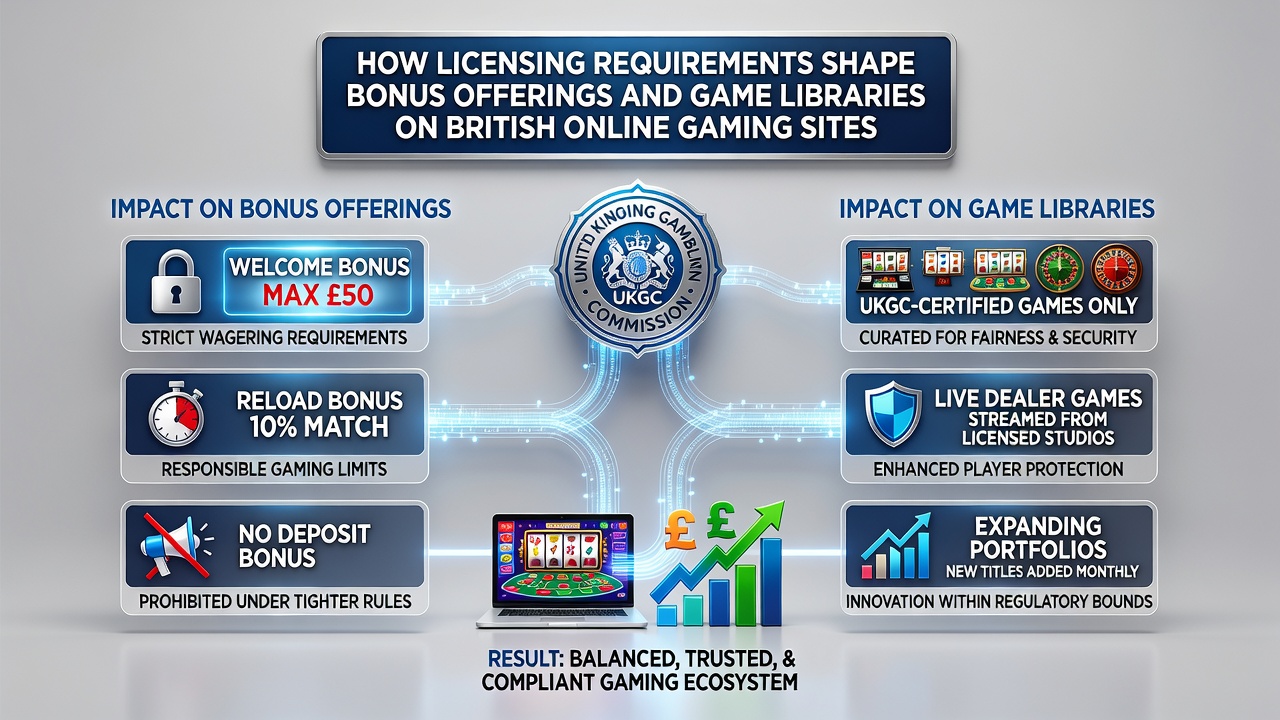
Progressive jackpot games face additional scrutiny because their prize pools must be tracked and reported separately, and licensing rules often mandate that a portion of contributions remain ring-fenced for player payouts. Researchers discovered that these requirements have led operators to prioritize games from suppliers already integrated into multiple regulated markets, which streamlines compliance but can slow the introduction of niche or experimental titles. There's this case where experts found certain innovative mechanics delayed for months while laboratories completed verification, illustrating how certification timelines shape the overall variety available at any given moment.
Regional Comparisons and Market Data
Comparisons with licensing systems in other regions highlight differences in bonus flexibility and game rollout speed. A report issued by the European Gaming and Betting Association noted that operators serving multiple territories often maintain separate game catalogs and bonus templates to satisfy varying local rules, and British platforms tend to adopt more conservative approaches than those in less restrictive zones. Figures reveal that sites licensed under stricter regimes display lower average bonus values yet report higher player retention rates over six-month periods.
November 2026 brings scheduled updates to several technical standards that will affect both bonus tracking systems and game certification protocols, and operators are already preparing backend adjustments to meet the new benchmarks. These changes aim to align data reporting across platforms, making it easier for regulators to monitor compliance in real time while giving players clearer visibility into how offers function.
Conclusion
Licensing requirements continue to define the boundaries within which British online gaming sites operate, shaping everything from the wording of bonus promotions to the selection of certified games that populate their libraries. Evidence from regulatory filings and industry analyses demonstrates that these rules promote consistency and accountability without eliminating variety, and the landscape will likely see further calibration as November 2026 approaches. Players encounter more standardized experiences as a result, while operators balance compliance costs against the need to remain competitive in a mature market.